
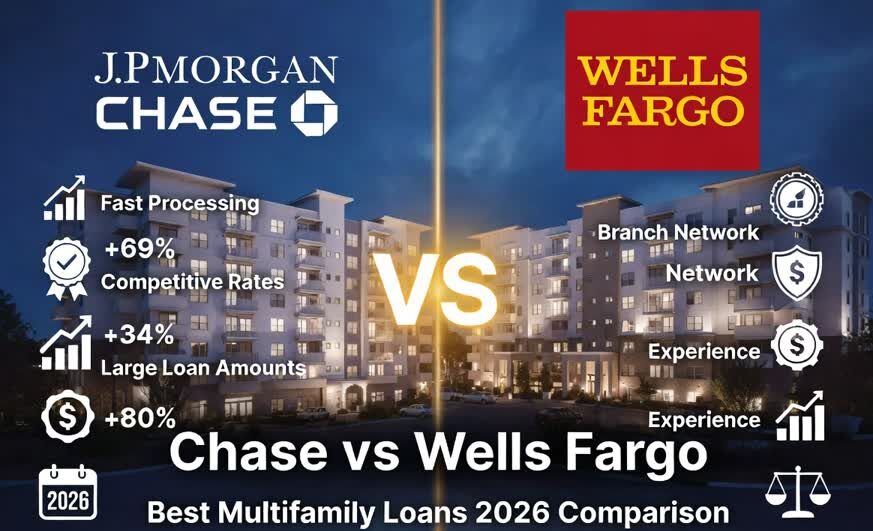
In the competitive world of US multifamily real estate, choosing the right lender is as important as choosing the right property. JPMorgan Chase and Wells Fargo are the two largest players in the apartment lending space, but they serve different types of investors. Whether you are a beginner looking for a 5-unit building or a seasoned pro managing hundreds of doors, understanding the nuances of their Multifamily Financing programs in 2026 is key to maximizing your cash flow.
1. JPMorgan Chase: The Leader in Efficiency and Local Expertise
JPMorgan Chase is currently the #1 multifamily lender in the USA by volume. Their strength lies in their “Chase Multifamily Lending” division, which focuses on streamlined execution.
-
Best For: Investors looking for “Stabilized” apartment buildings (5+ units) and those who value speed.
-
Key Programs: They offer everything from 3-year ARMs to 15-year fixed-rate loans. They are also a major provider of Fannie Mae DUS® loans, which offer non-recourse financing.
-
2026 Innovation: Through their “American Dream Initiative,” Chase has expanded lending for workforce and affordable housing, making it easier for investors to get approved for properties in emerging markets.
2. Wells Fargo: The Giant of Commercial and Affordable Housing
Wells Fargo has a massive balance sheet and a deep history in Commercial Real Estate (CRE). While Chase dominates in sheer number of loans, Wells Fargo often handles more complex, large-scale commercial transactions.
-
Best For: Large-scale developers, high-net-worth investors, and those focusing on Affordable Housing (LIHTC projects).
-
Key Advantage: Wells Fargo excels in Construction-to-Permanent financing. If you are building a multifamily complex from scratch, Wells Fargo’s ability to handle the construction phase and then roll it into a long-term mortgage is superior.
-
2026 Update: They have launched a $10M “Housing Affordability Breakthrough Challenge,” signaling their commitment to financing innovative housing solutions.
Comparison: Chase vs. Wells Fargo Multifamily Loans (2026)
| Feature | JPMorgan Chase | Wells Fargo |
| Minimum Loan Amount | Typically $500,000 | Typically $1,000,000+ |
| Approval Speed | Known for “Best-in-class” turn times | Average (More thorough due diligence) |
| Loan Types | Conventional, Fannie/Freddie, ARM | FHA/HUD, Construction, Balance Sheet |
| Customer Satisfaction | Ranked #1 in various CRE surveys | High (Focus on relationship banking) |
| Geographic Reach | Nationwide (All 50 states) | Nationwide |
3. Interest Rates & Terms: What to Expect in 2026
In mid-2026, multifamily interest rates have stabilized after the volatility of previous years.
-
Chase: Offers very competitive 6-month ARM programs and 15-year fixed options. Their fees are notoriously low, often starting at just $2,000 or 12.5 basis points.
-
Wells Fargo: Often provides “Relationship Discounts.” If you keep your business accounts and payroll with them, they may slash your mortgage rate by 0.25% to 0.50%.
4. Non-Recourse vs. Recourse Loans
-
Chase is a powerhouse for Non-Recourse financing through their agency partnerships. This means if the project fails, the bank can only take the property, not your personal assets (house, car, or other investments).
-
Wells Fargo also offers non-recourse but often requires more “liquidity” (cash in the bank) from the borrower to qualify for these premium terms.
5. The “Affordable Housing” Edge
If your investment strategy involves Government Subsidies (Section 8) or Tax Credits, Wells Fargo is the clear winner. They have one of the largest dedicated affordable housing teams in the world and can handle the complex “Equity + Debt” structures that these deals require.
Conclusion: Who Wins?
-
Choose JPMorgan Chase if you want a fast, efficient loan for a stabilized apartment building with low closing costs.
-
Choose Wells Fargo if you are doing a large-scale construction project or need a deep relationship with a bank that understands complex tax-credit financing.